
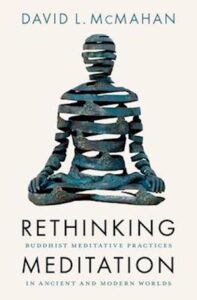

A stimulating read about how culture and Zeitgeist influence how we view mindfulness meditation, what it is for and how it is presented in different contexts. McMahan stays clear of presenting “the right way”. He names certain tensions, some of which have existed for a long time in the history of Buddhist traditions, some pertaining to our time:
- Is Buddhism about learning to appreciate the good that life has to offer or seeking an end to all experience?
- Is it about finding individual insight or realizing impersonal/timeless truths?
- Is it about becoming more accepting of the suffering of the world or ever more willing to respond to it?
- And I would add: are these contradictions or different stations on the journey? /CK
For Vipassana practitioners much of the content of this book will be familiar, and yet the book is a powerful reminder and encouragement not to run from challenges and pain, but to welcome them and to open to them fully. It shows how releasing deeper and deeper layers of contraction leads to inner freedom. /YN
 Ajahn Mahā Chatchai; A flower called mettā, Wisdom and Wonders, 2017
This little booklet presents mettā as the softness and gentleness of mind, focusing on attitude rather than particular wishes or phrases. Light and down to earth, it emphasises the preparation of the mind’s “soil” where the tree of mettā can bloom, making this practice very accessible. It is freely available in digital form, and also in Spanish. /BF
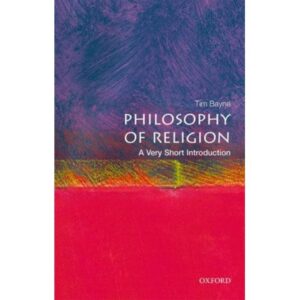
Tim Bayne: Philosophy of Religion: a very short introduction, Oxford University Press, 2018
Who hasn’t had chats about God’s existence or the afterlife with friends over a drink or meal? We can have quite confident opinions on these topics, often without enough reflection. While there is barely anything about Buddhism in this book, you will almost certainly find your own opinions about religion defended, refuted, or both. In a slim volume, academic but accessible, Tim Bayne outlines the main arguments from those who have spent their lives on questions which, in a way, we’re all interested in. /BF

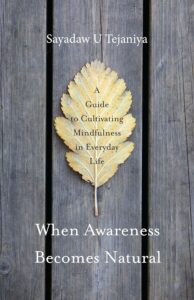
Sayadaw U Tejaniya: When Awareness Becomes Natural, Shambala Publications, 2016
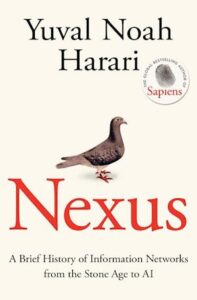
I don’t know what I will read over the summer. Maybe very little. But my best read of late was Yuval Harari’s Nexus I loved it, as all his books. I would also highly recommend a recent interview from Clear Mountain Monastery with Harari which is all about his meditation practice and views on core Buddhist teachings and practice
Recently (in hospital) I happily re-read Sayadaw U Tejaniya’s When Awareness Becomes Natural. I find him very helpful and encouraging for his frankness about his personal struggles, his sense of dharma practice as a marathon not a sprint, and his ability to keep pointing the attention towards how we practice in daily life. /JR

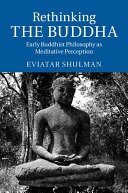
This book argues that all the central tenets of Buddhism, particularly the Four Truths, before they became doctrinal, started off as meditative perceptions, or observations to be cultivated in meditation practice. This is also true of other aspects of Buddhism, such as dependent arising and not-self. In this work Shulman traces, from an examination of the early texts, the development of the Four Truths, into a core aspect of Buddhist doctrine, arguing that they were never meant to become the foundations of an edifice called ‘Buddhism’. /JP
Jonardon Ganeri: The Concealed Art of the Soul: Theories of Self and Practices of Truth. Oxford University Press, 2007
For anyone who really wants to understand the Buddhist view on Self, this is an essential book as it places that view within Indian philosophical views of self in general. There are particularly informative chapters on the Buddhist view and the Upanishadic view that forms the background to the Buddha’s own teaching. /JP

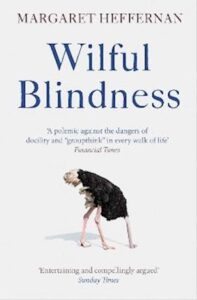
What is it we don’t want to know and how that impacts our lives. /CF